What is off gassing?
Off-gassing is the release of volatile organic compounds (VOCs) from materials used in homes, workplaces and furnishings. One of the most common and well-known compounds released is formaldehyde – a colourless chemical with a strong, distinct smell that can linger in indoor air long after new products are installed.
Found in items like furniture, flooring, paints, adhesives and insulation, formaldehyde levels can build up in enclosed spaces. Testing helps you understand exactly what is present in your air, so you can take steps to create a safer, healthier environment.
What should I know about off gassing?
What Causes Off-Gassing?
Off-gassing happens when chemicals trapped in manufactured materials slowly release into the air. Common sources include:
- New furniture, cabinets and wardrobes made with composite wood, chipboard or MDF
- Laminate, vinyl and carpet flooring
- Paints, varnishes, sealants and adhesives
- Insulation, foam and building panels
- Soft furnishings like curtains, upholstery and mattresses
Newly installed items usually release the highest amounts in the first few weeks or months – but low-level emissions can continue for years.
Signs You May Have High Levels
You may notice these when levels are raised:
- Strong chemical or “new” smell that doesn’t fade
- Headaches or feelings of nausea when in the room
- Itchy eyes, runny nose or sore throat
- Wheezing or breathing discomfort
- Fatigue or dizziness that improves when away from the space
Even without obvious symptoms, levels can still exceed recommended limits – testing is the only way to know for sure.
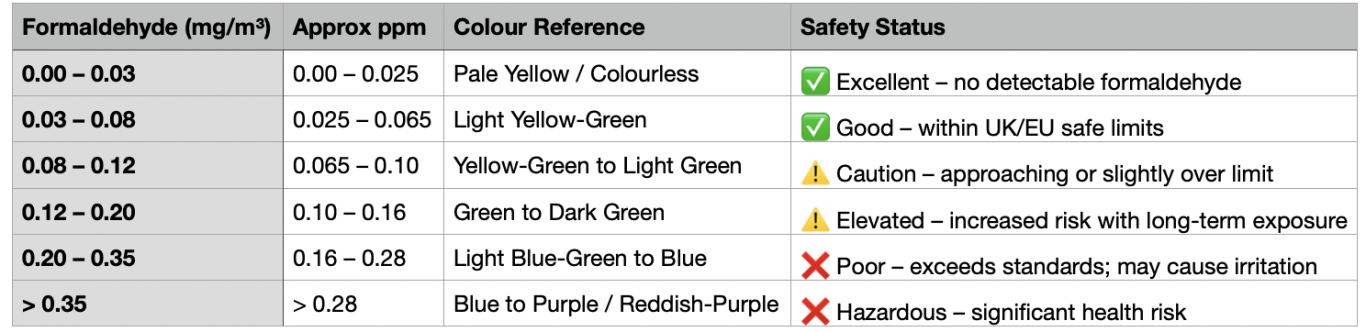
What the colour results mean
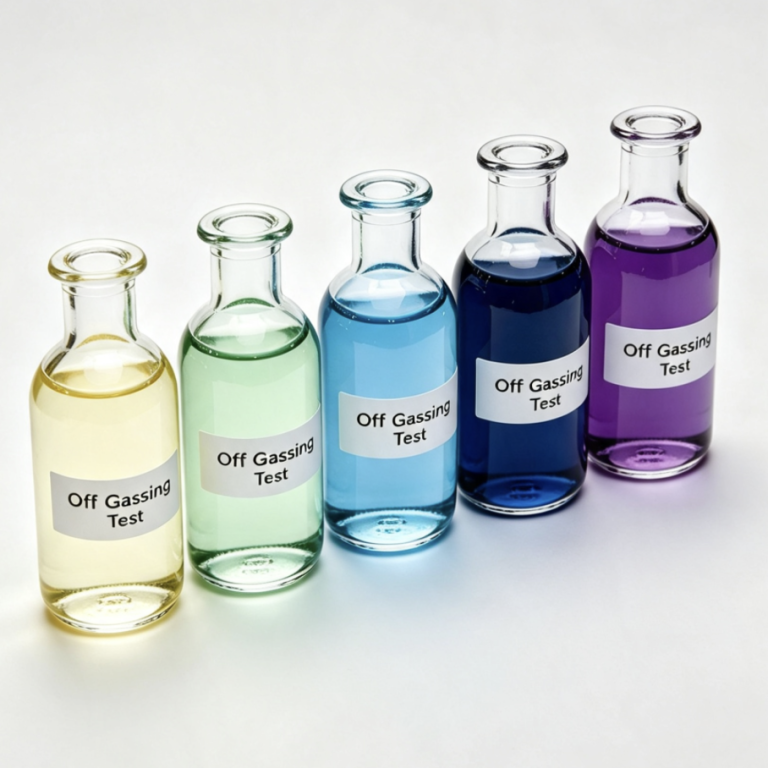
This chart shows how your sample compares against standard safety levels. The colour of your tested liquid matches one of the six shades.